“Everywhere there are starting points, intersections and junctions that enable us to learn something new.” — Jacques Rancière
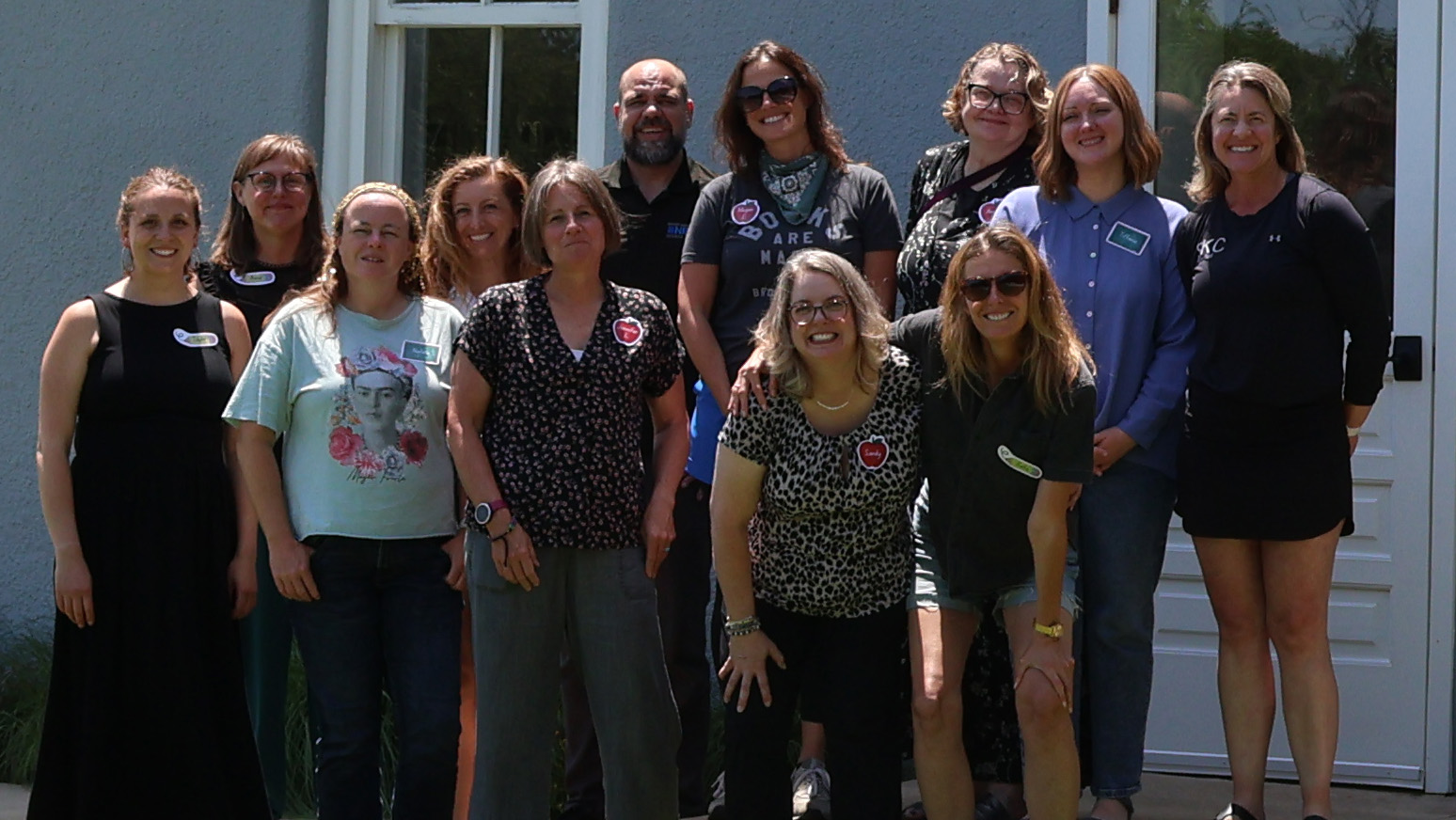
Earlier this week, school librarians, NEKLS staff, and Winter School hosts gathered near Lecompton for NEKLS Summer School @ Winter School, a day of conversation and reflection on some of the challenging questions facing school librarians today.
Housed in a historic one-room schoolhouse abutting remnant Kansas prairie, Winter School provided an ideal setting for the discussion. Like the rhizomes beneath the prairie soil, the questions we explored were deeply interconnected, with each leading naturally to another.
View photos from the day on Flickr →
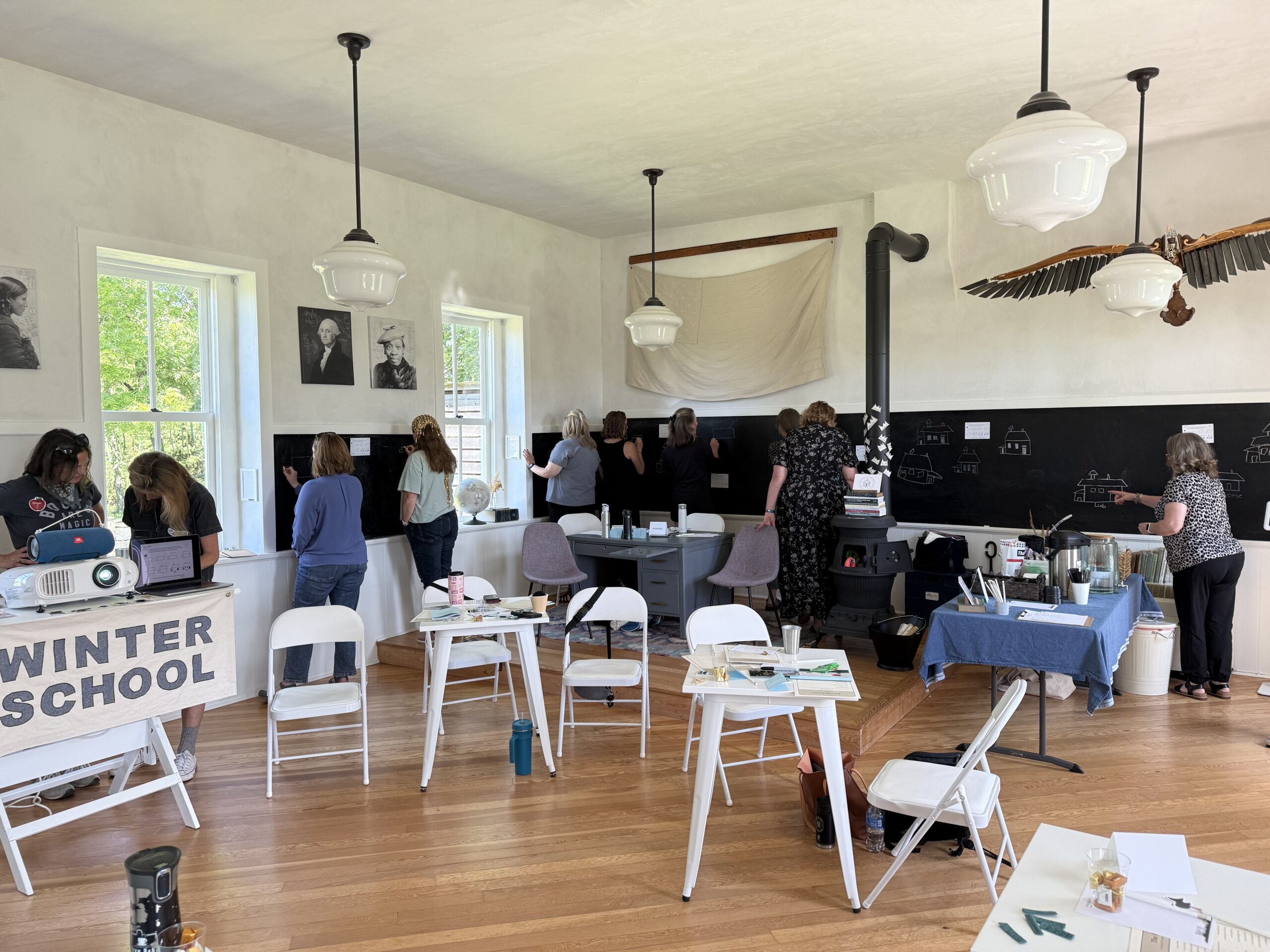
We began the day with a simple prompt: How is this schoolhouse different today than it was in the past? From there, we considered what a one-room schoolhouse might have in common with a school library — spaces where different ages and experiences overlap, and where traditional learning exists alongside practical, real-world skill building.
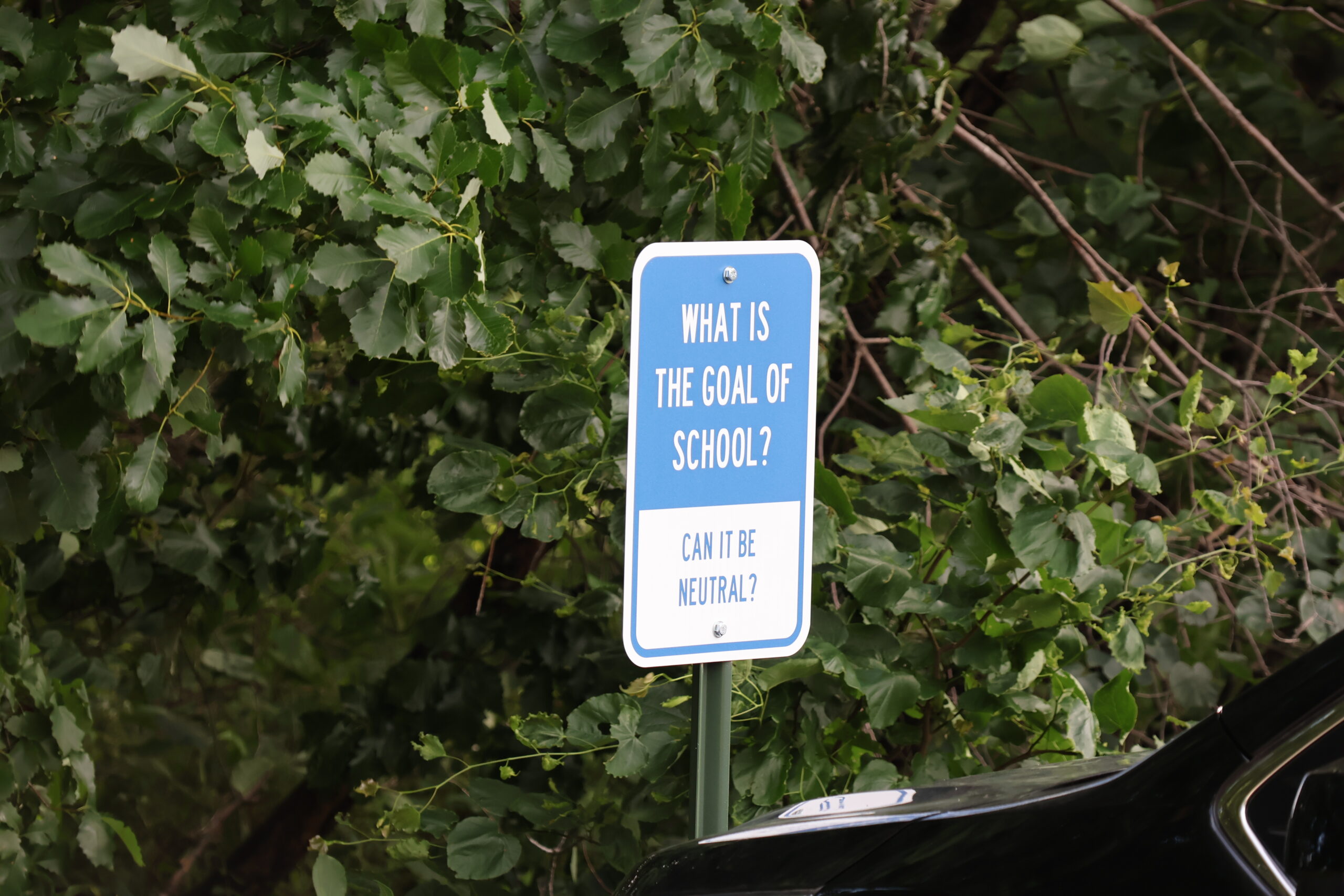
What is the goal of school — and can it ever be neutral?
These two questions, displayed in Winter School’s opening exhibition History, Notice Me, set the tone for the day. They’re deceptively simple. Schools prepare young people for society. They socialize, set norms, and draw boundaries. But they also have the potential to create space for exploration and self-discovery. These functions don’t always coexist comfortably, and school librarians often find themselves navigating that tension.
Censorship and Childhood Innocence
Our afternoon conversation circled around censorship — the formal kind that can play out in school board meetings, and the quieter kind often described as self-censorship. Participants explored how ideas about childhood innocence often shape challenges to library materials and examined the historical origins of those ideas. Who defined childhood innocence, and whose interests did those definitions serve?
Seeing Yourself on the Shelf
The group reflected on representation—how collections help shape young people’s understanding of themselves and the world around them. Participants also discussed how librarians navigate questions of what is appropriate for different readers and at different ages.
Practical Pressures
The conversation also touched on some concrete, ongoing barriers to service — particularly around funding digital collections, where licensing models continue to create challenges for school libraries working with limited budgets, as well as the need for planning time that is often in short supply.
Thank you to our participants, our hosts and facilitators Katie and Megan from Winter School, and presenter Tiffanie St. Clair for helping guide the conversation.
Throughout the day, one theme kept resurfacing: the issues facing school librarians rarely stand alone. Censorship connects to representation. Representation connects to questions about the purpose of school. Those questions connect to how society defines childhood itself. Like a rhizome, follow one root and you quickly discover it is connected to many others.